Physical Address
304 North Cardinal St.
Dorchester Center, MA 02124
Physical Address
304 North Cardinal St.
Dorchester Center, MA 02124

You pick up your phone to check one message. Twenty minutes later, you are still scrolling, and you can’t quite remember what you wanted in the first place. If that sounds familiar, you are in very large company. For many of us, screens have quietly become the default way we fill every spare moment, from the bus stop to the bedroom.
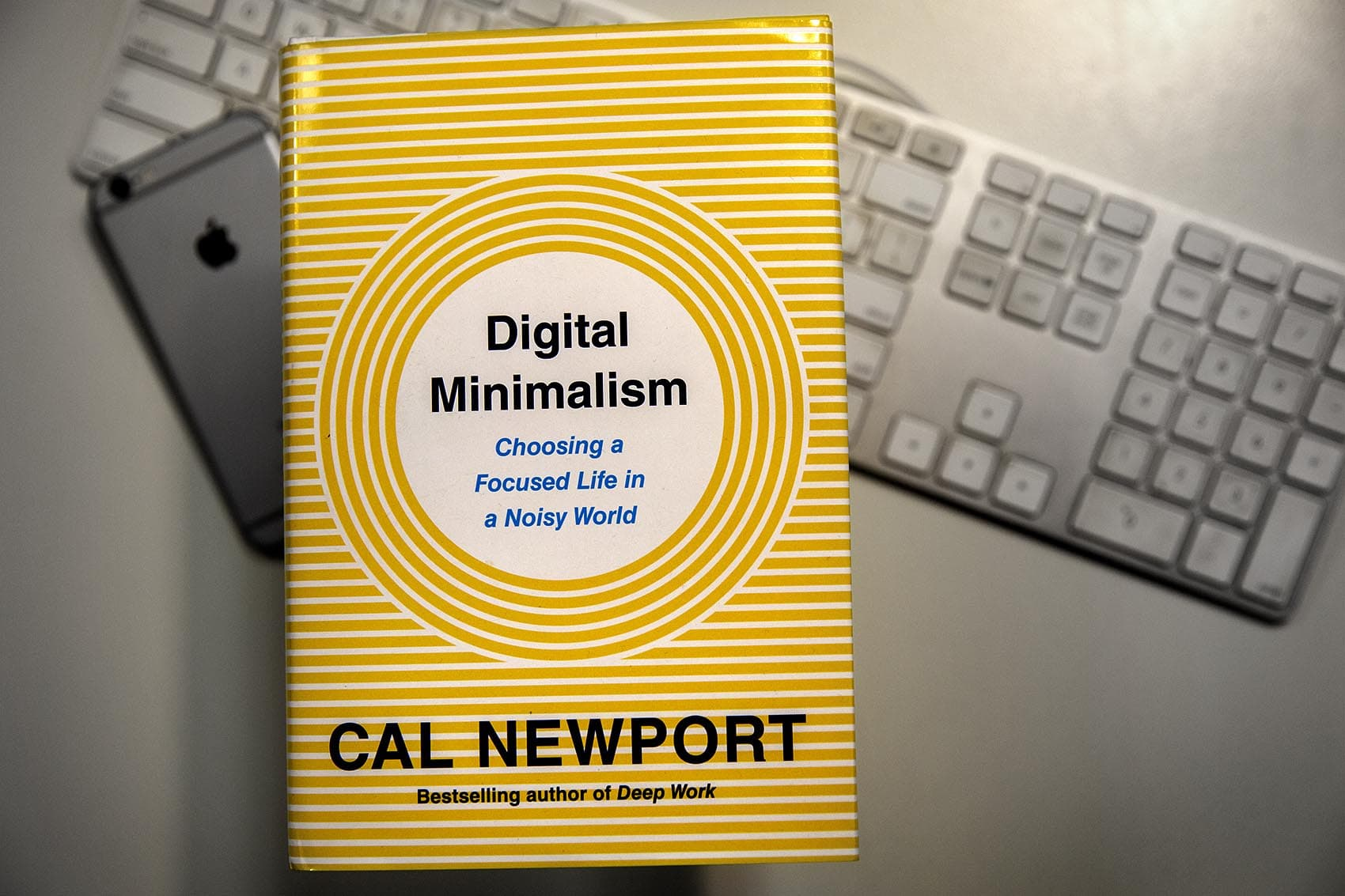
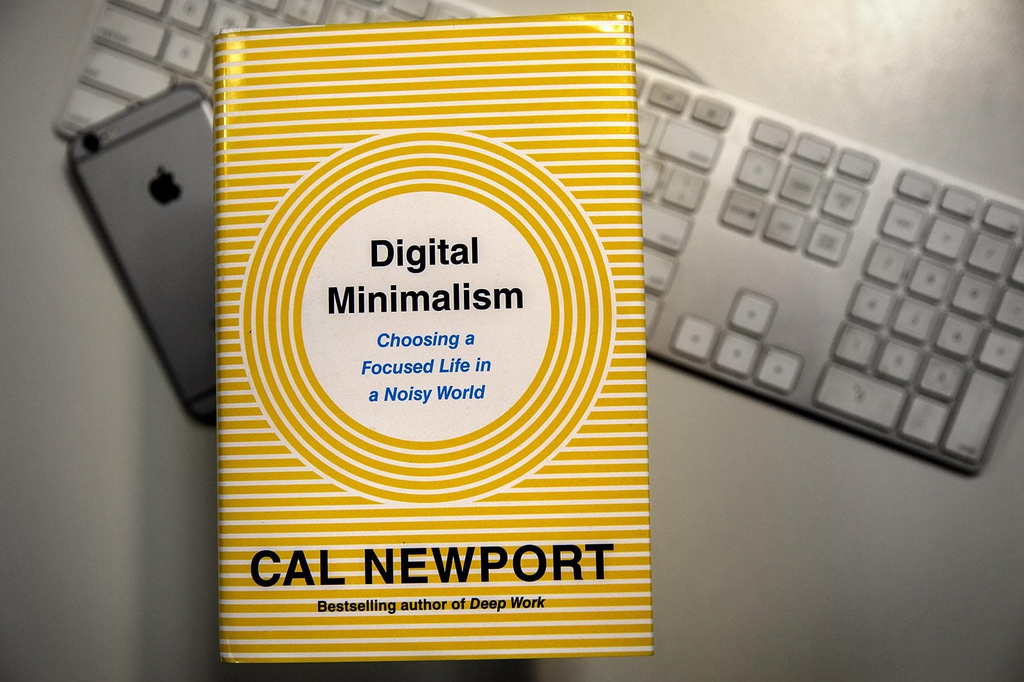
That is exactly the problem Cal Newport tackles in his book Digital Minimalism. It is not a book that tells you to throw your phone away. It offers something more realistic: a way to take back control of your attention and decide, on purpose, which technologies deserve a place in your life. This article walks through its main ideas and how you can apply them.
Cal Newport is a computer science professor at Georgetown University and the author of several well-known books on focus and work, including Deep Work. He is also notable for having never used social media himself, which gives his argument a certain credibility. Digital Minimalism was published in 2019 and quickly became a bestseller.
The book is built on one simple observation: many of the apps and platforms we use were designed to capture as much of our attention as possible. Newport argues that we didn’t consciously choose this arrangement. It crept in gradually, one convenient feature at a time, until our time and mental energy were no longer entirely our own.
Newport defines digital minimalism as a philosophy of technology use. You focus your online time on a small number of carefully chosen activities that strongly support the things you value, and you happily let go of everything else.
The key word is value. Most of us judge a tool by whether it offers some benefit. Can this app help me stay in touch? Could this feed teach me something? Almost any technology passes that test. Newport suggests a stricter question: does this tool serve what I care about most, and is it the best way to do so? If the answer is no, the cost in attention outweighs the small benefit.
He compares this to how a careful person handles money. You wouldn’t spend your savings on anything that offers a little pleasure. You would spend it on what matters. Your attention deserves the same care.
The most practical part of the book is a month-long experiment. For thirty days, you step away from optional technologies, meaning the apps, sites, and devices that aren’t truly essential to your work or daily responsibilities. Social media, endless video, and casual news browsing are common examples.
During this break, the goal isn’t just to abstain. You also rediscover activities that fill your time in more satisfying ways, such as reading, walking, cooking, learning a skill, or seeing friends in person. After the thirty days, you slowly reintroduce a technology only if it clearly supports something you value, and only under rules you set, such as when and how you will use it.
This approach works better than gradual cutting back for a simple reason. A clean break lets you notice how you actually feel without the constant pull of notifications, and it shows you which tools you truly miss and which you merely used out of habit.
1. Make room for solitude. Newport argues that solitude, meaning time away from other people’s thoughts and input, is essential for clear thinking and emotional balance. Constant connection leaves little space to process our own ideas. A walk without headphones can feel strange at first, but it often brings the calm and creativity we have been missing.
2. Prefer real conversation to constant connection. A like or a quick comment is easy, but it is a thin substitute for a real talk. The book encourages us to put more effort into phone calls and face-to-face time, and to treat quick online reactions as a small addition rather than the main way we keep relationships alive.
3. Rebuild high-quality leisure. Scrolling is passive and rarely leaves us satisfied. Newport encourages leisure that involves effort and skill, such as woodworking, gardening, learning an instrument, or volunteering. These activities give a sense of progress and meaning that a feed never can.
This book suits anyone who feels their attention slipping away: students, professionals, parents, or simply people who want a calmer relationship with their phone. It is clearly written, full of real examples, and practical enough to act on right away.
It isn’t perfect, though. Some readers find that the strict declutter is hard to follow if your job or family relies heavily on messaging and social platforms. The book is also written mainly from the viewpoint of someone with a fairly flexible work life, so you may need to adapt the rules to your own situation. A few readers feel the examples repeat a similar point. Even so, the central idea is strong enough that these weaknesses rarely spoil the experience.
You don’t need to read the whole book to begin. These steps capture its spirit.
Digital Minimalism is less about hating technology and more about loving your own life enough to protect it. Newport’s message is that attention is one of the most valuable things you own, and it deserves to be spent on purpose.
You don’t have to quit everything. Start small, notice what changes, and keep only what truly earns its place. Many readers find that as the noise fades, they rediscover hobbies, deeper conversations, and a quiet that feels like coming home.