Physical Address
304 North Cardinal St.
Dorchester Center, MA 02124
Physical Address
304 North Cardinal St.
Dorchester Center, MA 02124

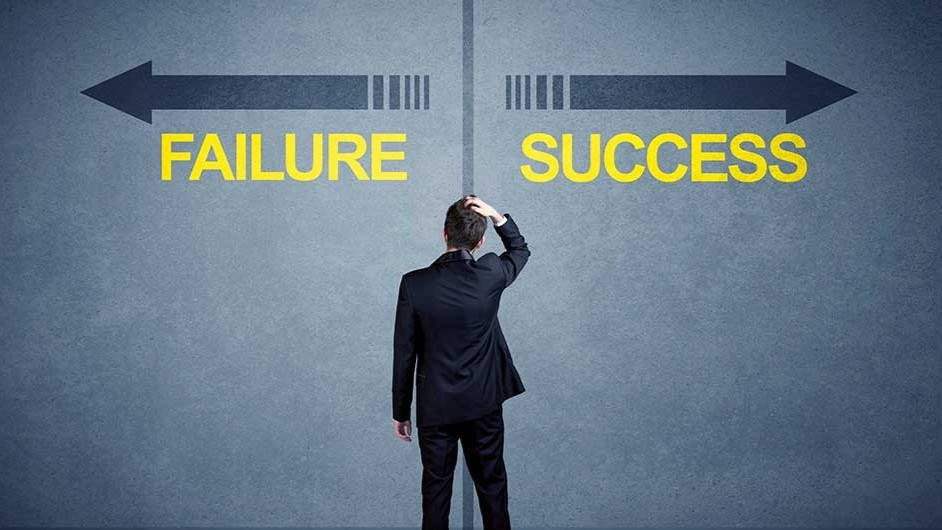
Almost everyone remembers the first time they failed at something that mattered. Maybe it was an exam you were sure you’d pass, a business idea that never took off, or a job interview that ended with a polite “we’ll be in touch” and then silence. The sting of that moment tends to stay with us, and we often carry it longer than the lesson it offered.
Most of us are taught to treat failure as the opposite of success, something to avoid, hide, or feel ashamed of. But if you look closely at the lives of people who built something worth admiring, failure is rarely the opposite of their success. It is usually part of the road that led there.
Let’s be honest first. Failure is uncomfortable, and pretending otherwise doesn’t help anyone. When something you worked hard on falls apart, it’s natural to feel disappointed, embarrassed, or even angry at yourself. Those feelings don’t mean you’re weak. They mean you cared.
The problem begins when we let that first reaction decide the story. After a setback, the mind often jumps to big, harsh conclusions: “I’m not good enough,” “I always mess things up,” “I should have known better.” These thoughts feel true in the moment, but they are usually exaggerations built on one bad result.
Giving yourself a little time to feel the disappointment is healthy. Staying inside it is where people get stuck. The goal isn’t to ignore the pain but to move through it and ask a better question: What is this trying to show me?
One of the most useful shifts you can make is to see failure as feedback instead of a verdict. A verdict says, “You are finished.” Feedback says, “Here is what didn’t work. Try something different.”
Think about how a child learns to walk. Nobody stands up on the first attempt. Toddlers fall dozens of times, and each fall teaches their body something about balance. No child decides after the tenth tumble that walking isn’t for them. They simply keep adjusting until it works.
Somewhere between childhood and adulthood, we lose that attitude. We start to believe that if we didn’t get it right the first time, we must not be capable. But learning has always worked through trial and error. The adult version of falling down is a failed project, a rejected proposal, or a goal that didn’t work out, and the lesson inside it is just as valuable if we’re willing to look.
Stories of people who turned setbacks into success are everywhere, though it’s worth remembering that they are often told in a polished way after the fact.
Consider James Dyson, the inventor behind the bagless vacuum cleaner. By his own account, he went through more than five thousand prototypes before he arrived at a design that worked. Each failed version wasn’t a waste. Each one taught him something about airflow, filtration, and design that the next version could use.
Or think about J.K. Rowling, whose first Harry Potter manuscript was turned down by a number of publishers before one finally said yes. Had she stopped after the early rejections, one of the best-loved book series in the world might never have reached readers.
Even Michael Jordan, widely regarded as one of the greatest basketball players ever, was famously placed on the junior varsity team in high school instead of the varsity squad. He has spoken openly about how many shots he missed and games he lost during his career, and how those misses were part of what made him great.
These stories aren’t meant to suggest that persistence always guarantees success. Life isn’t that simple. The point is that none of these people avoided failure. They kept going because they treated each setback as a step in the process, not the end of it.

Knowing that failure can teach you something is one thing. Actually learning from it takes a bit of deliberate effort. Here are a few practical ways to do it.
Here is something that doesn’t get said enough: the fear of failure can do more damage than failure itself. When we’re afraid of getting it wrong, we avoid trying. We stay in comfortable jobs, delay starting that project, or never speak up with an idea. The result is a life shaped by what we didn’t risk.
Failing at something at least gives you data and experience. Never trying gives you nothing except the lingering question of “what if?” Over time, most people regret the chances they didn’t take far more than the ones that didn’t work out.
One helpful trick is to ask yourself, “What’s the worst that could realistically happen?” and then, “Could I recover from that?” More often than not, the answer is yes. The worst case is usually far less dramatic than the version our fears paint.
Resilience isn’t something you’re simply born with. It grows the way a muscle does, through repeated use. Every time you face a setback and choose to keep going, you strengthen your belief that you can handle difficulty.
This is why it helps to start with small risks. Try a new skill you might be bad at. Share your work before it feels perfect. Apply for the opportunity that feels slightly out of reach. Each small attempt builds your tolerance for uncertainty, and over time, big setbacks become less frightening.
It also helps to be kind to yourself in the process. Treating yourself with the same patience you’d offer a good friend isn’t indulgent. People who respond to their mistakes with understanding are generally more willing to try again than those who punish themselves.
Maybe the real shift is in how we define the word. If failure means “I tried and it didn’t work this time,” then it is simply a normal part of doing anything worthwhile. If failure means “I’m not capable,” then it becomes a weight that holds us down.
The truth is that the only way to truly fail is to stop learning. As long as you’re paying attention, adjusting, and moving forward, even your worst setbacks are doing useful work.
The next time something doesn’t go your way, try not to see it as the end of the story. Feel the disappointment, take a breath, and then get curious. Ask what the experience can teach you and what small step you can take next.
Failure will visit all of us, and often more than once. But it doesn’t have to be a wall. With the right mindset, it becomes fuel: the energy, insight, and determination that carry you toward the thing you actually want. The people you admire most didn’t succeed because they never fell. They succeeded because they kept getting back up and used every fall to learn something new.